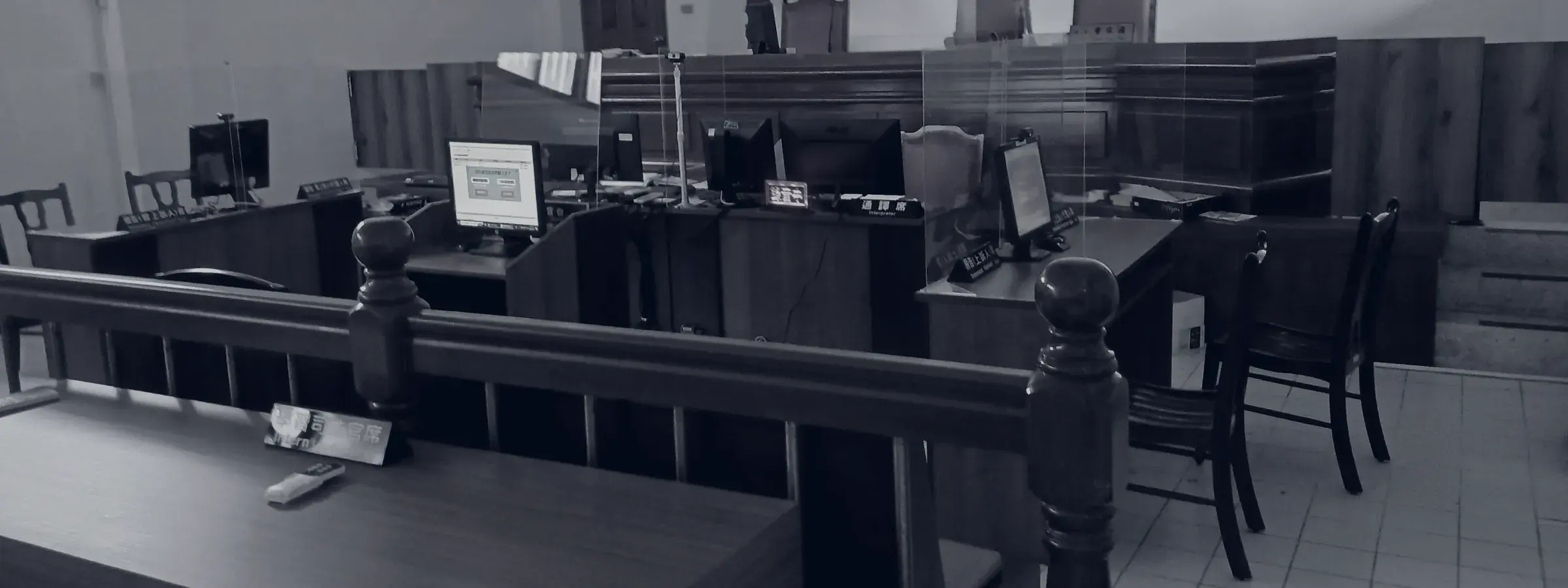
This guide follows Taiwan law. Consultations are in Mandarin; bring an interpreter or ask us about interpretation.
You can report a crime without speaking Chinese; police agencies keep interpreter (通譯) lists. Interpreters are also required in the investigation and at trial (Code of Criminal Procedure (刑事訴訟法), Art. 99; Court Organization Act (法院組織法), Art. 98). If a prosecutor or judge finds that a victim's attendance or testimony helps the case, the National Immigration Agency (NIA, 移民署) may let the victim keep their residence (Immigration Act (入出國及移民法), Art. 31(4)(7)). In immediate danger, call 110 first.
Can I report a crime if I don't speak Chinese?
Yes. The National Police Agency (警政署) says every police agency keeps an interpreter contact list; late at night, or if no one suitable is listed, officers set up a three-way call through the 1955 or 1990 hotline for bilingual interpretation (according to the National Police Agency's Q&A on safety for foreign residents, on the 1990 hotline Mandarin, English and Japanese are available around the clock; Vietnamese, Indonesian, Thai and Cambodian are available Monday to Friday, 9:00–17:00, excluding public holidays). The NIA's 1990 hotline answers in English around the clock.
In immediate danger, call 110 first. For domestic violence, sexual harassment or stalking, you can also call the 113 protection hotline (24 hours, toll-free), which the agency says offers interpretation in five languages: English, Vietnamese, Indonesian, Thai and Japanese. Labor brokerage (人力仲介) staff may not interpret in cases tied to their own brokerage.
Can I ask for an interpreter when giving a statement or in court?
Yes. Art. 99 of the Code of Criminal Procedure requires an interpreter for anyone who does not understand the language, including victims and witnesses being questioned. Art. 98 of the Court Organization Act says the same for witnesses and others involved who do not understand Mandarin (國語).
Ministry of Justice (法務部) guidelines for prosecutors (檢察機關辦理刑事案件使用通譯應行注意事項) also cover complainants and witnesses: prosecutors should ask whether you need interpretation; if you bring an interpreter, they must check that person's identity, interpreting ability and relationship to you (points 2, 3 and 7).
被告為聽覺或語言障礙或語言不通者,應由通譯傳譯之;必要時,並得以文字訊問或命以文字陳述。前項規定,於其他受訊問或詢問人準用之。但法律另有規定者,從其規定。(刑事訴訟法第99條)
Unofficial English summary (not an official translation): an accused person with a hearing or speech impairment or who does not understand the language must be assisted by an interpreter, written questioning or statements may be used when necessary, and this also applies to others being questioned unless another law provides otherwise.
What if my visa or residence runs out before the case ends?
If you still need to reside in Taiwan, you must apply to the NIA for an extension before your residence expires (Immigration Act, Art. 31(1)). If the reason for your residence (居留原因) ceases during the residence period, the NIA in principle revokes the permit. It may instead let you stay if you are a victim or witness whose help the investigation or trial needs, and a prosecutor or judge finds that your attendance or testimony helps the case (Immigration Act, Art. 31(4)(7)). The NIA decides.
This clause assumes a residence period, for example with an Alien Resident Certificate (ARC, 外僑居留證). Short-stay visitors (停留) follow different rules: visitor-visa holders apply to the NIA to extend their stay under Art. 31(1) and Art. 3 of the regulations on foreigners' stay and residence (外國人停留居留及永久居留辦法), within 15 days before the stay ends; visa-free or landing-visa entrants who cannot leave before their stay ends for a listed reason apply to the Bureau of Consular Affairs (外交部領事事務局) for a visitor visa under Art. 4 of the same regulations. If you overstay because you are a crime victim, the immigration authority must help safeguard your residence rights in Taiwan and assist with your return home (Crime Victim Rights Protection Act (犯罪被害人權益保障法), Art. 6(2)(5)).
移民署對於外國人於居留期間內,居留原因消失者,廢止其居留許可……但有下列各款情形之一者,得准予繼續居留:……七、刑事案件之被害人、證人有協助偵查或審理之必要,經檢察官或法官認定其到庭或作證有助於案件之偵查或審理。(入出國及移民法第31條第4項)
Unofficial English summary (not an official translation): the NIA revokes the residence permit of a foreigner whose reason for residence ceases, but may allow continued residence where a victim or witness in a criminal case is needed to assist the investigation or trial and a prosecutor or judge finds that their attendance or testimony helps the case.
Can I still pursue the case after I go home?
You can appoint an agent (代理人) to file a criminal complaint (告訴), but a prosecutor or judicial police officer may order you to appear in person if necessary (Code of Criminal Procedure, Art. 236-1(1)). For deadlines, see Filing a criminal complaint: deadlines, procedure, and reconsideration.
Protection services under the Crime Victim Rights Protection Act are provided only in Taiwan (Art. 15(3)). If you cannot apply for compensation yourself, an agent may apply for you (Art. 55(1)).
Can a foreigner apply for crime victim compensation?
The Act defines applicants by type of harm and place of crime: the surviving family of someone killed, people seriously injured, and victims of sexual offenses (性自主權遭受侵害之人) may apply for crime victim compensation (犯罪被害補償金) (Art. 50). A crime here means an act punishable under Taiwan law committed in Taiwan's territory, or on a Taiwanese ship or aircraft outside it (Art. 3, item 1).
Among Articles 50 to 57, a Taiwan-nationality-with-household-registration requirement appears in the rules on overseas compensation (境外補償金) for nationals killed abroad (Arts. 52(1)(4) and 54). Compensation does not apply where a claim lies under the Compulsory Automobile Liability Insurance Act (強制汽車責任保險法), relevant to traffic accidents (Art. 50, proviso). Apply in writing to the review committee (審議會) where the crime occurred (Art. 62(1)). For amounts and deadlines, see Can crime victims participate in a criminal trial?
因犯罪行為被害致死亡者之遺屬、致重傷者及性自主權遭受侵害之人,得申請犯罪被害補償金。但依強制汽車責任保險法得請求給付或補償者,不適用之。(犯罪被害人權益保障法第50條)
Unofficial English summary (not an official translation): the surviving family of people killed by a crime, people seriously injured, and victims of sexual offenses may apply for crime victim compensation, except where payment can be claimed under the Compulsory Automobile Liability Insurance Act.
Where can I get protection services and help?
You can contact the Association for Victims Support (犯罪被害人保護協會; toll-free 0800-005-850). Migrant workers can call 1955 (Chinese, Thai, Indonesian, Vietnamese and English); complaints of personal harm are referred to local labor authorities or the judicial police.
Victims and their families are entitled to dignified, non-discriminatory protection services (Crime Victim Rights Protection Act, Art. 7). For tourists harmed in Taiwan, emergency handling falls to the transportation authority, and the foreign affairs authority assists with cross-border matters (Art. 6(2)(6), (7)). Each country's office in Taiwan decides what help it offers. For U.S. citizens, the American Institute in Taiwan (AIT) says it can help replace a stolen passport, contact family, share information on victim resources and compensation, and list English-speaking lawyers, but cannot explain the local criminal process, investigate, give legal advice or represent you, act as an official interpreter, or pay your fees. Other nationals: check your own country's office.
What protections apply if I may be a victim of human trafficking?
The unlawful means of trafficking include withholding important documents and improper debt bondage (Human Trafficking Prevention Act (人口販運防制法), Art. 2, item 1). Judicial police who discover or receive a suspected case must immediately screen for victims (鑑別), and a suspected victim may not be forcibly deported until the screening or any objection is decided (Art. 11(1), (8)).
An identified victim is issued, on application, a one-year residence permit, extendable by up to a year at a time, and may apply directly for a work permit (Art. 14(1), (3)). The authorities must provide help including interpretation and legal assistance (Art. 15(1)). A victim outside Taiwan may be questioned and examined by video link at a Taiwanese embassy, consulate or representative office (Art. 23(2)).
When should I talk to a lawyer?
Consider a consultation when your residence deadline, trip home and case must be weighed together. Lawful foreign residents and victims or suspected victims of trafficking may qualify for legal aid (法律扶助) (Legal Aid Act (法律扶助法), Art. 14(1)(1), (3)). The Legal Aid Foundation (法律扶助基金會) says its legal consultation is open to anyone in Taiwan regardless of status (412-8518; from a mobile phone, dial 02 first). Attorney Hsu Chia-Chun practices at 昊鼎國際法律事務所 臺中所. This article is general information, not legal advice on your case.
Sources: National Police Agency, Ministry of Justice, Workforce Development Agency, Association for Victims Support, Legal Aid Foundation, American Institute in Taiwan.